

Feedback workflow problems rarely announce themselves as engineering problems.
When teams discuss engineering waste, the conversation usually begins much later in the process. Attention turns toward technical debt, inefficient development cycles, unnecessary rework, missed deadlines, or implementation mistakes. The assumption is understandable. Those are the places where waste becomes visible.
The actual problem often begins somewhere else entirely.
- A customer reports an issue.
- A stakeholder notices friction during a product review.
- A QA analyst discovers unexpected behavior during testing.
Someone captures a screenshot. A discussion begins. A comment thread grows. A ticket eventually appears.
Nothing about this sequence feels unusual.
In fact, it feels like normal product work.
Yet by the time development begins, the original understanding behind the issue may already exist across multiple conversations, disconnected screenshots, meeting notes, chat threads, and project management systems. The engineering team receives the final artifact. The surrounding context remains scattered elsewhere.
The waste has already started accumulating.
Not because engineers are working inefficiently.
Because the workflow delivering information to engineering has gradually lost clarity before implementation ever began.
Most waste appears long after the original problem
Imagine a product manager reviewing customer onboarding feedback.
Several customers struggled to complete an account setup flow. During a review session, the issue appears straightforward. Stakeholders discuss what customers experienced. Designers explain original assumptions. Support teams contribute customer conversations. Product managers begin connecting patterns.
At that moment, the team possesses something valuable.
Shared understanding.
Everyone involved understands not only what happened but why it happened.
Then the information begins moving.
- A screenshot gets saved.
- A summary gets written.
- A task gets created.
Comments appear across multiple systems.
By the following week, development is ready to investigate.
What reaches engineering is rarely the same thing that existed during the original discussion.
The issue survives.
The surrounding understanding often does not.
Developers now inherit a problem that requires interpretation.
The engineering team can see evidence of friction. What they frequently cannot see is the full chain of reasoning that transformed an observation into a development task.
The result is predictable.
Questions emerge.
Clarifications begin.
Assumptions replace missing context.
Meetings appear.
Additional messages get exchanged.
None of this work contributes directly to solving the original problem.
It exists because understanding must be reconstructed before implementation can confidently proceed.
Information moves faster than context
Modern product organizations have become remarkably effective at moving information.
Feedback can be shared instantly.
Screenshots can be captured within seconds.
Comments can appear from stakeholders across multiple time zones.
Remote collaboration has dramatically increased organizational reach.
At the same time, context has become more fragile.
Information moves easily because information is portable.
Context is different.
Context includes assumptions, reasoning, priorities, constraints, customer observations, previous discussions, rejected alternatives, and the subtle details that help people understand why something matters.
Much of that understanding exists naturally during conversations.
Very little survives when conversations become isolated artifacts.
- A screenshot explains what someone saw.
- A ticket explains what someone wants.
- A comment explains part of a discussion.
None of these elements necessarily preserve the entire story.
As workflows become increasingly distributed, organizations often discover an uncomfortable reality.
Communication scales more easily than understanding.
The more systems involved in a workflow, the more opportunities exist for context to become compressed, simplified, or lost entirely.
Engineering often becomes the reconstruction team
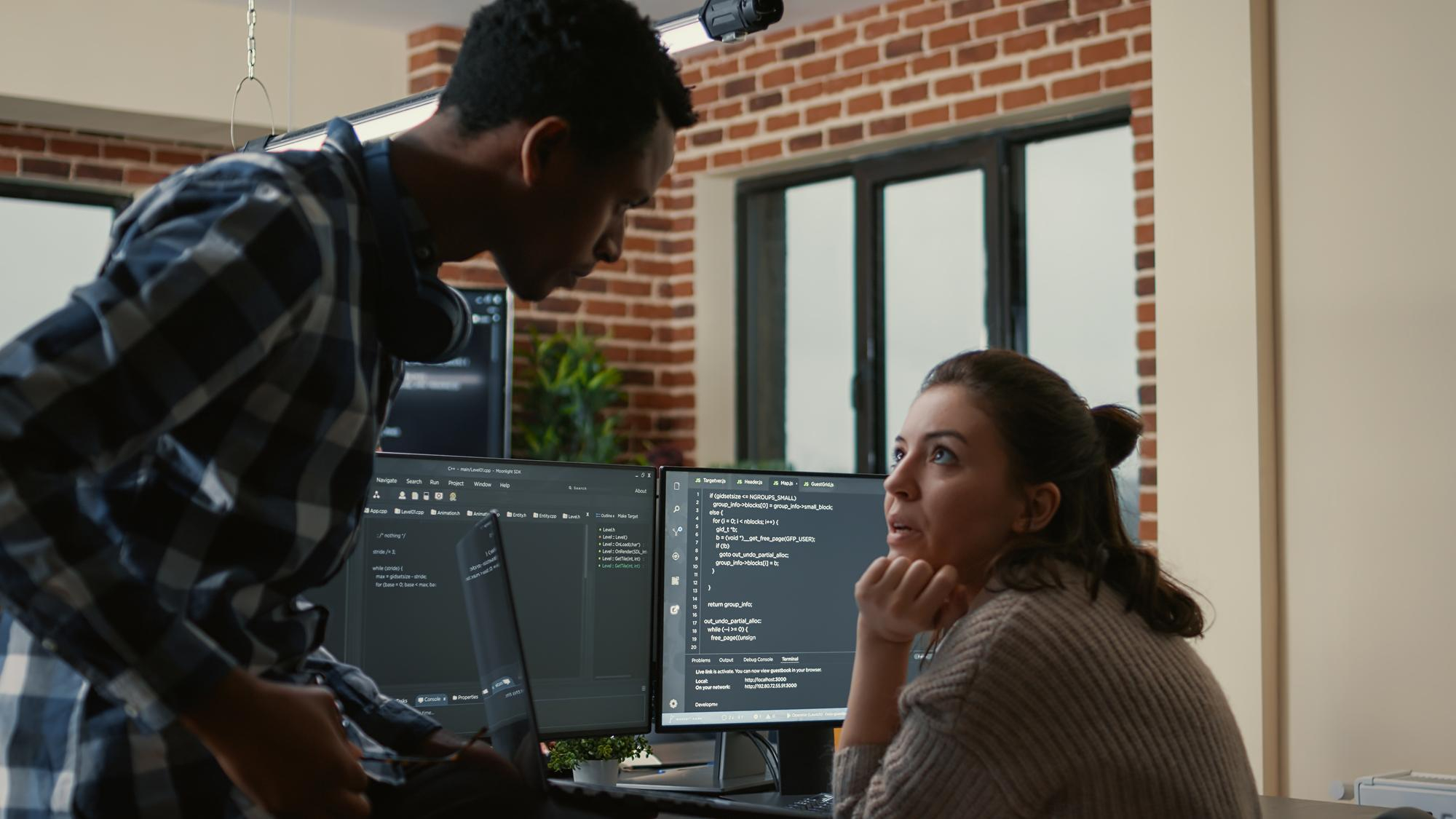
One of the less visible responsibilities many engineering teams inherit is context reconstruction.
Developers are frequently expected to bridge gaps that appeared long before implementation started.
A ticket references a screenshot.
- The screenshot references a discussion.
- The discussion references a customer complaint.
- The customer complaint references behavior observed weeks earlier.
To fully understand the problem, engineers must often trace information backward through multiple systems.
This work rarely appears in sprint planning.
It rarely appears in velocity calculations.
Organizations rarely measure it directly.
Yet it consumes time continuously.
Developers spend time searching for information that already exists somewhere else.
Product managers revisit previous discussions.
QA teams attempt to recreate original scenarios.
Stakeholders answer questions they believed were already resolved.
Everyone is working.
Progress feels slower than expected.
The reason is subtle.
The organization is spending effort reconstructing context rather than executing against it.
This form of waste often remains invisible because it resembles normal collaboration.
In reality, it represents work that should not have been necessary in the first place.
The hidden cost of repeated explanations
Most teams recognize repeated explanations as an annoyance.
Few recognize them as a workflow problem.
When the same issue requires explanation multiple times, organizations often assume communication simply needs improvement.
The reality is frequently deeper.
Repeated explanations usually indicate that context failed to survive a previous transition.
A product manager explains an issue during a review.
The same issue gets explained again while creating tasks.
Later it gets explained to development.
Then QA requires additional clarification.
Stakeholders revisit the discussion during validation.
The organization gradually normalizes repetition.
People begin assuming that this is simply how product work functions.
But every repeated explanation signals the same underlying issue.
Understanding is not traveling with the work.
Instead, people repeatedly reattach context every time information changes hands.
The operational cost becomes substantial over time.
Not because individual conversations are expensive.
Because the organization keeps paying for the same understanding multiple times.
Most workflows preserve decisions, not reasoning
This distinction explains many execution problems that teams struggle to diagnose.
Most modern workflows do a reasonable job preserving outcomes.
Teams can usually identify what decision was made.
- They can find the ticket.
- They can locate the approval.
- They can review the final requirements.
- What becomes harder to find is the reasoning behind those decisions.
- Why was the issue important?
- What customer behavior created concern?
- What alternatives were discussed?
- What assumptions influenced the chosen solution?
These details often disappear as workflows move toward execution.
Yet these details frequently determine whether implementation aligns with original intent.
Without them, development becomes an exercise in interpretation.
Different individuals reach different conclusions.
Clarification cycles expand.
Confidence decreases.
Waste accumulates quietly through uncertainty rather than visible failure.
- The irony is that organizations often respond by creating more documentation.
- The issue is not always missing documentation.
- The issue is fragmented understanding.
Good feedback workflows reduce interpretation work
The strongest feedback workflows share a common characteristic.
They reduce the amount of interpretation required later.
This does not mean capturing more information.
It means preserving the right information.
Developers should not need to reconstruct why an issue matters.
QA teams should not need to rediscover original intent.
Product managers should not repeatedly translate the same context.
The workflow itself should carry enough understanding forward that implementation remains connected to the original observation.
When context survives, execution becomes calmer.
Questions still exist.
Discussions still happen.
Collaboration remains necessary.
But teams spend less time recovering understanding and more time acting on it.
The difference appears small from the outside.
Operationally, it changes how work moves through an organization.
Engineering waste often begins before engineering work
Most organizations look for engineering waste inside engineering processes.
Sometimes the source exists much earlier.
A fragmented feedback workflow can create uncertainty long before development begins.
By the time engineers encounter the work, context may already be distributed across conversations, screenshots, comments, reviews, and disconnected systems.
Development then inherits a secondary responsibility: rebuilding understanding.
The waste is not only technical.
It is operational.
It appears through clarification cycles, repeated explanations, interpretation work, unnecessary meetings, delayed confidence, and execution friction that feels difficult to explain.
This is why feedback workflows deserve more attention than they often receive.
They do more than collect observations.
They determine how understanding moves through an organization.
And when understanding fails to travel with the work, engineering teams frequently end up paying the cost later.
A quieter way to think about feedback

Most teams do not need more feedback. Most teams already have plenty of feedback.
The more important question is whether context survives long enough to remain useful.
Cluva exists in that gap between observation and execution. Not as another project management system, but as a way to preserve the understanding that helps developers, product teams, and stakeholders move from feedback to implementation with less reconstruction along the way.
Every product team eventually develops its own way of handling feedback.
- Some workflows depend on memory.
- Some depend on meetings.
- Some depend on product managers constantly translating context between stakeholders and developers.
- Those approaches often work—until the volume of feedback grows.
At that point, the challenge is rarely collecting more feedback. The challenge is preserving the context that makes feedback useful.
Cluva helps product teams keep feedback connected to the understanding behind it, so developers inherit more than screenshots, comments, and disconnected requests. They inherit the context needed to execute with confidence.
If your team spends more time reconstructing feedback than acting on it, it may be worth examining the workflow between observation and implementation.
Because most engineering waste begins long before engineering work starts.