

Product feedback usually begins with good intentions.
A product manager notices an issue during a release review. A customer success manager forwards a client complaint. QA reproduces an unexpected behavior before launch. A founder leaves a screenshot inside Slack with a short message: “This doesn’t feel right.”
At that moment, everyone involved understands the problem remarkably well.
The screenshot still lives beside the conversation that produced it. Questions are answered immediately. The reasoning behind every observation is still fresh. Nobody is struggling to understand what needs attention because the people discussing the issue are still inside the original context.
The difficulty begins only after the feedback starts moving.
The Slack message becomes a Jira ticket. Someone copies the screenshot into a document. Another teammate rewrites the description for engineering. A few comments disappear because they seemed obvious at the time. The discussion that originally explained why the issue mattered never reaches the implementation team.
Nothing significant appears to have changed.
- The screenshot survived.
- The ticket exists.
- The task has been assigned.
Yet the original understanding has already started to fragment.
By the time a developer opens the ticket several days later, they are no longer looking at the same problem the product team originally observed. They are looking at a simplified interpretation of that problem—one that has lost much of the surrounding operational context that made the issue obvious in the first place.
Most teams don’t notice this transition because it rarely feels dramatic. Product feedback does not usually disappear overnight. It becomes progressively smaller every time it changes systems, formats, or audiences. Each handoff removes only a little information, but together those reductions fundamentally change how the work is understood.
The workflow changes long before development begins
Consider a recurring issue that many SaaS teams experience.
During a routine product review, QA discovers that users occasionally lose their selected filters after returning to a dashboard. The behavior is inconsistent, making it difficult to reproduce immediately, but everyone present agrees that something feels wrong.
QA records a short video.
A product manager adds several screenshots with comments explaining where the experience becomes confusing.
The designer joins the discussion and points out that the interface should preserve user state between navigation events because that was part of the original interaction design.
For twenty minutes, the conversation is productive.
Questions receive immediate answers.
Different perspectives combine into one shared understanding.
Eventually someone summarizes everything into a development ticket.
The ticket contains the reproduction steps, the screenshots, and a short description. On paper, it appears complete.
Several days later, a developer begins implementation.
The screenshots explain what happened, but not why everyone considered the issue important. The recording demonstrates the visible bug but omits the earlier discussion about user expectations. The designer’s reasoning now exists only inside an old conversation thread. QA remembers additional observations but assumes they were already documented.
None of this creates an impossible task.
It creates an interpretive task.
Instead of implementing the solution, engineering begins reconstructing the original understanding.
The first clarification message arrives.
“Is this happening consistently?”
Another follows.
“Should the filters persist after refresh or only after navigation?”
A meeting appears on the calendar because answering these questions individually takes longer than discussing them together.
From the outside, it looks like development required clarification.
In reality, the workflow required reconstruction.
Modern collaboration preserves communication, not understanding
Most modern product organizations communicate constantly.
Slack conversations continue throughout the day. Product reviews happen every week. Design files accumulate detailed comments. Ticketing systems record implementation history. Video recordings document bugs with impressive clarity.
Communication has never been easier.
Preserving execution understanding, however, remains surprisingly difficult.
The reason is subtle.
Most collaboration tools are designed around conversations rather than workflows.
Every tool captures one part of the story exceptionally well. Slack captures discussion. Design tools capture visual decisions. Ticketing systems organize implementation. Screen recordings preserve user behavior.
The operational problem appears between those systems.
Understanding rarely moves through an organization in its original form. Instead, it is repeatedly translated.
- A conversation becomes a summary.
- A summary becomes a ticket.
- A ticket becomes a development task.
- A development task becomes implementation.
Every translation asks someone to decide what deserves to survive.
Most of those decisions are made quickly because everyone believes the surrounding context will remain obvious.
It almost never does.
By the time implementation begins, engineering is often working from artifacts that accurately describe isolated facts while failing to preserve the reasoning that originally connected those facts together.
That difference explains why experienced development teams often ask questions that product managers believe were already answered.
The answers were never actually missing. They simply stopped travelling with the work.
Good feedback preserves execution context
This distinction becomes increasingly important as teams grow.
In smaller companies, the people who discover a problem are often the same people who fix it. Context travels naturally because it remains inside the same conversation. Developers hear customer calls, designers participate in bug reviews, and founders answer implementation questions directly.
Growth changes that dynamic.
Specialization improves efficiency, but it also introduces distance. Product managers become responsible for communicating decisions. QA documents defects. Designers explain intended behavior. Engineering receives work through structured backlogs instead of real-time conversations.
None of these changes are problematic on their own.
The challenge is that feedback is still frequently written as though the next person already understands everything that came before.
Many feedback documents describe symptoms exceptionally well. They identify broken interactions, highlight visual inconsistencies, and include screenshots from the right screens. Yet they rarely preserve the sequence of reasoning that led the team to conclude a change was necessary.
Developers inherit the outcome of a discussion rather than the discussion itself.
As a result, implementation becomes an exercise in interpretation instead of execution.
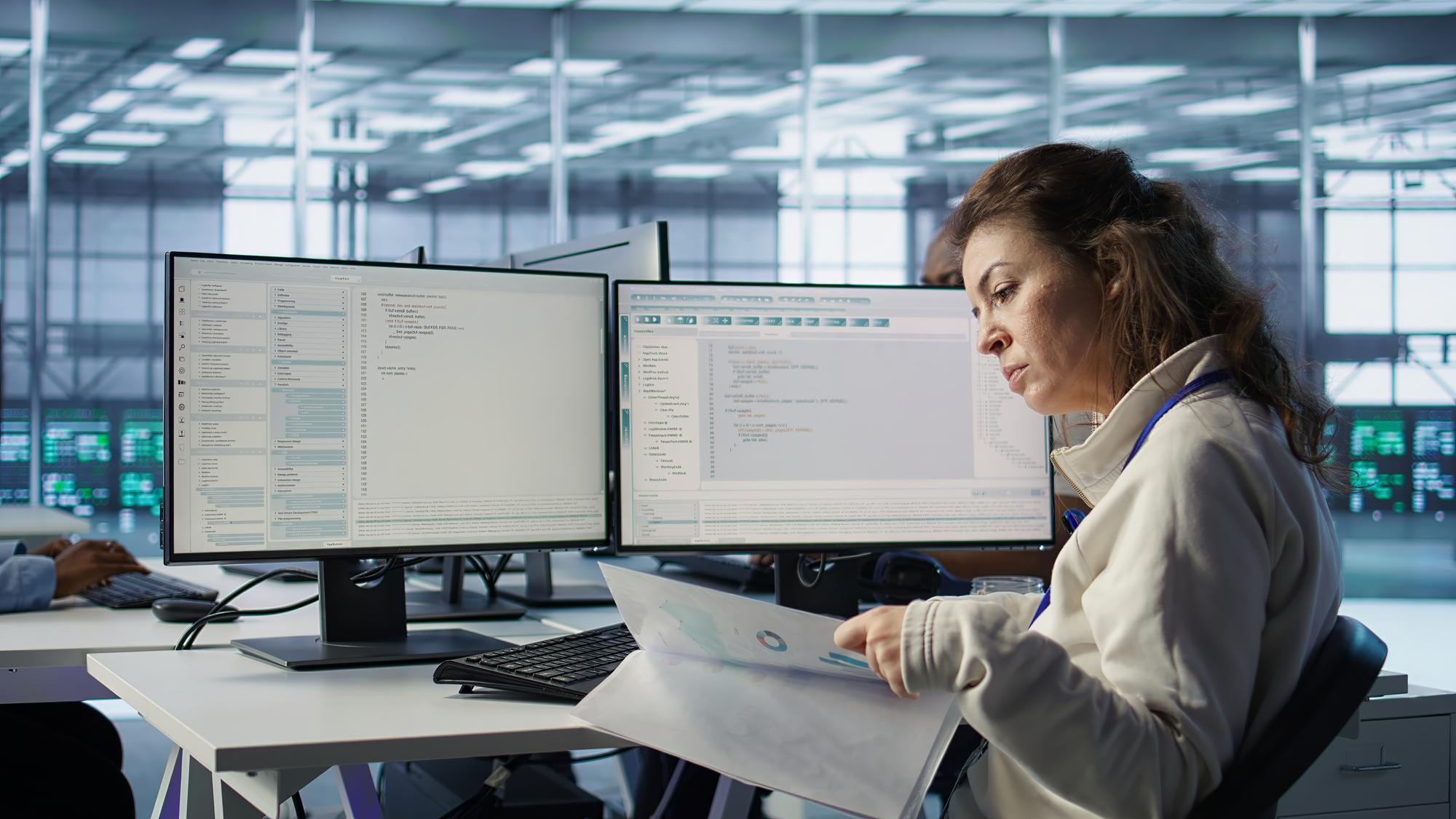
Clarification work quietly becomes engineering work
Most organizations track development velocity carefully.
They measure completed tickets, sprint progress, cycle time, and deployment frequency. These metrics help teams understand how efficiently software moves through delivery.
What they rarely measure is clarification work.
Clarification appears as small interruptions scattered throughout the week.
A developer asks a question inside Slack.
QA searches for an older recording.
The product manager reopens a design file to explain an interaction.
Someone schedules a fifteen-minute meeting because describing the issue in writing feels more difficult than talking through it.
Individually, these moments seem insignificant.
Collectively, they become a substantial operational cost.
Engineering time slowly shifts away from solving problems toward rebuilding the understanding that existed naturally several days earlier. Product managers become translators between conversations instead of decision-makers. QA repeatedly explains observations that were already discovered once before.
The organization begins investing effort in recovering context instead of preserving it.
Eventually these recovery activities become so common that nobody questions them anymore.
Weekly bug triage meetings grow longer.
Implementation estimates become increasingly cautious because uncertainty remains high until development begins.
Stakeholders wonder why relatively small changes require so much discussion before any code is written.
The visible bottleneck appears inside engineering.
The underlying bottleneck began much earlier.
Feedback should arrive ready for execution
Teams often believe better feedback simply means writing more.
Longer descriptions.
More screenshots.
Additional comments.
More documentation.
In practice, volume rarely solves the problem.
Execution improves when feedback preserves relationships rather than isolated information.
A developer should understand not only what changed, but what triggered the observation, how users experienced it, what previous discussion already answered, which screenshots belong together, and why the requested behavior represents the intended product experience.
When those relationships remain intact, implementation becomes noticeably calmer.
Questions still appear because software is inherently complex. Unexpected edge cases still emerge. Technical trade-offs still require discussion.
But the conversation changes.
Clarification becomes the exception rather than the default.
Engineering spends its time solving technical problems instead of reconstructing product understanding.
That shift is subtle, yet it fundamentally changes how work moves across the organization.
Product feedback becomes infrastructure
Teams often think of feedback as communication.
In reality, feedback behaves more like infrastructure.
Infrastructure rarely attracts attention while it functions correctly. People notice roads only when traffic stops moving. They notice power systems only during outages. The same principle applies to product operations.
When feedback reliably preserves execution context, development feels predictable. Work moves quietly between product, design, QA, and engineering because understanding travels alongside every decision.
When that infrastructure weakens, organizations compensate through meetings, repeated explanations, duplicated discussions, and increasingly cautious implementation.
None of these activities create new product value.
They simply recover value that already existed before the workflow fragmented.
The most effective product teams are not necessarily the ones that communicate the most.
They are the teams that lose the least understanding between observation and execution.
That distinction becomes increasingly important as organizations adopt more asynchronous ways of working. The more distributed a team becomes, the more valuable structured execution context becomes.
Feedback is no longer just documentation.
It becomes part of the product delivery system itself.
Closing reflection
Product work rarely becomes chaotic because people stop communicating.
It becomes chaotic because understanding changes form every time work moves between people, tools, and systems.
By the time engineering begins implementation, the original insight that inspired the feedback often exists only as fragments spread across conversations, screenshots, tickets, and memory.
The organization then invests hours recovering context that already existed once before.
That pattern feels normal because it is so common.
It should not feel inevitable.
Good product feedback is not simply information recorded for another person to read.
It is context preserved carefully enough that the next person can continue the work without having to rediscover the thinking that came before.
When teams protect that continuity, execution becomes noticeably calmer—not because development becomes easier, but because understanding arrives intact.
A quieter way to work

If your team frequently revisits the same discussions, schedules meetings to explain bug reports, or rewrites product feedback before engineering can begin, the issue may not be communication.
It may be how context travels through your workflow.
Cluva is designed as the execution context layer between product feedback and development—helping teams preserve the understanding behind every observation so developers can begin implementation with clarity instead of reconstruction.